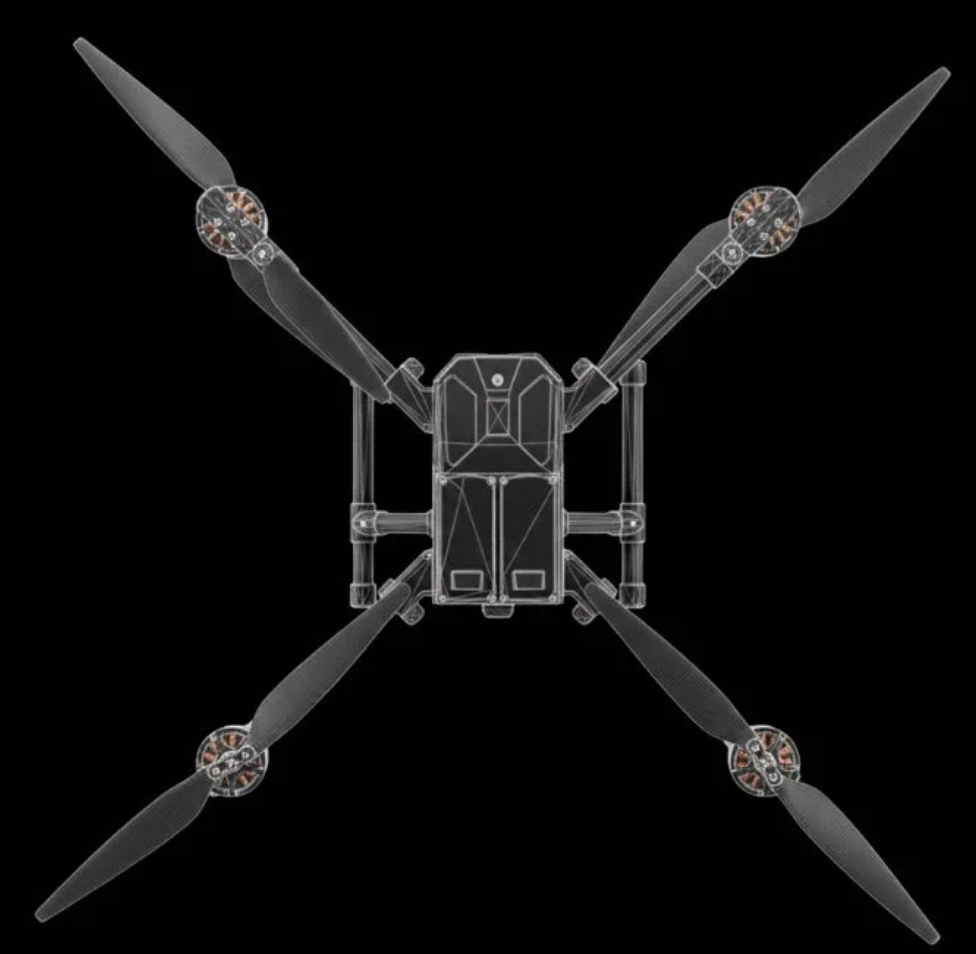
When we invested in Thoron, we didn’t look at it as a drone company. We saw the first piece of a grid that can look after itself, or as Thayne puts it, a self-healing grid.
America has 5.5 million miles of distribution lines and roughly 180 million poles, and almost none of them can report their own condition. Someone has to go and look, and many utilities check a wooden pole up close only once every five to ten years. Automated switches can reroute power around a fault, but only after something breaks.
Major outages cost American homes and businesses more than $67 billion a year on average, and $121 billion in 2024 alone. In 2023, trees and failing equipment were the two most common causes. Fire raises the stakes: grid equipment starts few wildfires, but some of the deadliest, and four utilities have faced more than $30 billion in wildfire claims since 2017.
Utilities inspect with bucket trucks, helicopters and, increasingly, drones. For the last decade, that drone was usually a DJI. That era is over. Since December 2025, new foreign-made drone models can not be approved for sale in the US. Utilities need American alternatives, but they are struggling to find drones that meet their needs. And this is not only about a ban. Utilities and other critical infrastructure operators do not want a foreign company’s drones mapping the weak points of their grid, whatever the rules say. Meanwhile, most of the new money in drones is going to defense, leaving utilities without a suitable replacement for DJI.
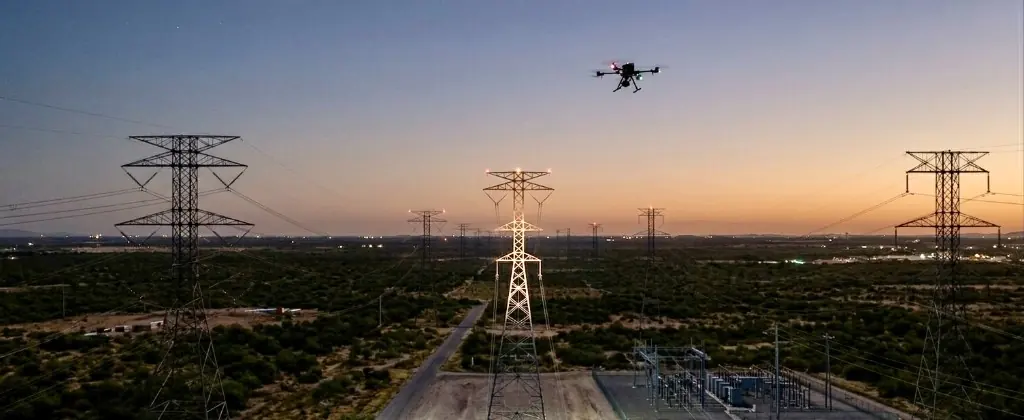
Thoron is going after this gap from first principles, starting from what operators actually need. Thayne knows those needs first-hand. Before founding Thoron, he was a drone operator himself and later ran large drone operations. He lived the problems operators deal with every day: batteries that don’t last, unstable firmware, flyaways, poorly designed and built airframes, payloads and other components that won’t work together, and vendors who can’t help.
He saw that DJI worked because it built a high-quality, integrated system and obsessed over the operator. Customer needs drove the engineering: understand the problem, then invent a solution for it. Thayne is bringing that same approach to Thoron. Elsewhere, getting a working drone often meant taking on an integration project. A utility running dozens or hundreds of drones can’t repeat that project for every one.
Meeting the team convinced us they are the right people to build this. Thayne has put experienced engineers on the hardest parts of the system: flight software, hardware, electronics and aerospace engineering. And they design from the field, not the whiteboard. Their first visit to a utility starts with learning. They arrive without a product to sell or demo, spend time with the crews, and ask how they maintain their grid and which problems they need help solving.
A better inspection drone is only one part of the picture. In today’s technology landscape, it’s an incremental step, and on its own it isn’t why we backed Thoron. What makes Thoron interesting is what the drone unlocks: a way into the grid, and the start of something much bigger.
We believe intelligence is getting cheap and abundant, so the bottleneck moves to the physical world. Language models already do work that used to take teams of people, and we believe the path toward superintelligence (SI) will reshape every industry, not just software. And AI runs on electricity: data centres are now the leading driver of new spending on the US grid. The grid that powers AI is the same one we still inspect by eye.
But SI has a blind spot. Today’s models learned from the internet, and there is no internet of the physical world. That data has to be collected, and it’s only as good as the machine collecting it. Most inspection fleets were never designed for that. Entergy says a single 20-mile flight can produce a terabyte of images, and much of it is still reviewed by eye. Drones already collect more data than crews can make sense of. What’s missing is a system that turns those images into decisions about what needs fixing and sends crews to act.
That’s why Thoron isn’t just building a better drone. It’s building the drone as a data system first. Because it owns the airframe, controller, payloads and software, every flight can capture consistent imagery with the same sensors and the same context, and every new drone can add to a growing record of the grid. That record is what trains models to spot a cracked insulator or a tree growing into a line, and to send a crew before it fails.
The physical world scales at the speed of its verifier. For the grid, the drone is the verifier.
We like to say the physical world scales at the speed of its verifier. For the grid, the drone is the verifier: it’s how a utility proves what is actually happening on its lines. Every defect a crew confirms and fixes becomes a labelled example, and the loop gets faster each time.
We believe Thoron can become the system behind a self-healing grid. Drones fly their routes, models detect the first signs of failure, and crews intervene before a cracked insulator or an overgrown tree becomes an outage or a fire. Operators gain eyes across the network, and line crews know where they’re needed and what they’ll face before they arrive. Thoron’s software is designed from the start to connect whole fleets, so that vision can grow as the rules allow. As power demand rises, the people keeping the grid running gain something they’ve never had: a grid that helps them anticipate trouble and stay ahead of it.
We backed Thoron because we believe this is the team to build self-healing systems for the infrastructure modern life depends on: utility grids first, then oil and gas and other industries where reliable operations depend on inspection and maintenance. Or as Thayne puts it, “we help maintain the backbone of modern civilization.” They are operators who lived the problem and built Thoron because the market had no answer. They have since assembled a team built to execute on it, with a system designed and built in America for American infrastructure.
We’re excited to back Thayne and the team as they build it.